Take 1 · Game table
Lay your cards on the table
Pick a theme, a player count and an audience, then draw mechanics from your decks. Each card says what it promises and what it risks. There is no recipe to follow.
Play table · New project
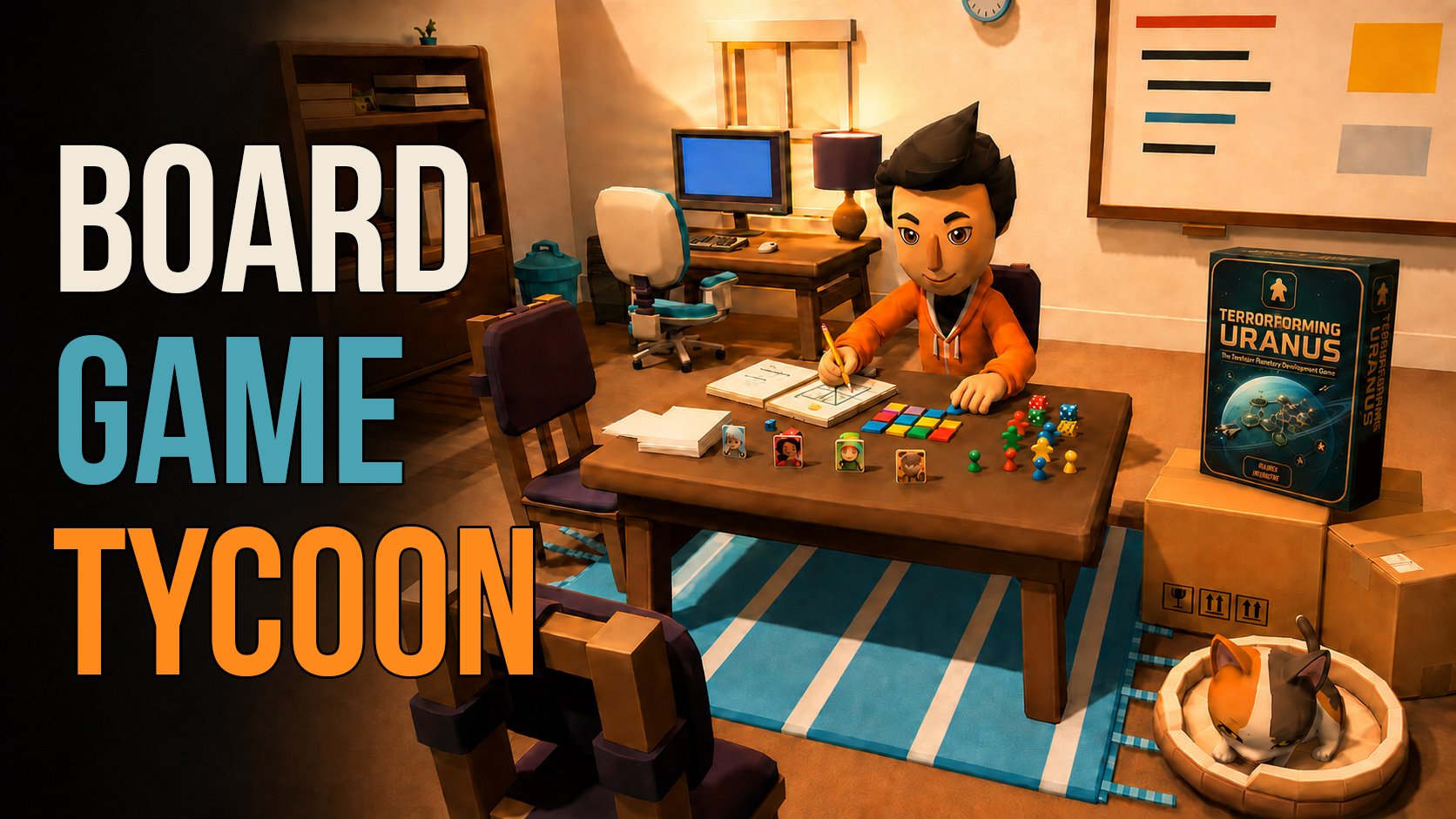
A cozy management sim for Windows, Mac and Linux, in English and German. Design games, give them a cover, print them for real, and answer to the market.
Note to self
Make a game people love.
Test it until it clicks. Print just enough copies. Don't go broke before the fair.
Prefer email? I'll write when there's news.
Table cam · Six takes
Every game you publish walks the same road. Here it is in six short takes from the current build.
Take 1 · Game table
Pick a theme, a player count and an audience, then draw mechanics from your decks. Each card says what it promises and what it risks. There is no recipe to follow.
Take 2 · Cover designer
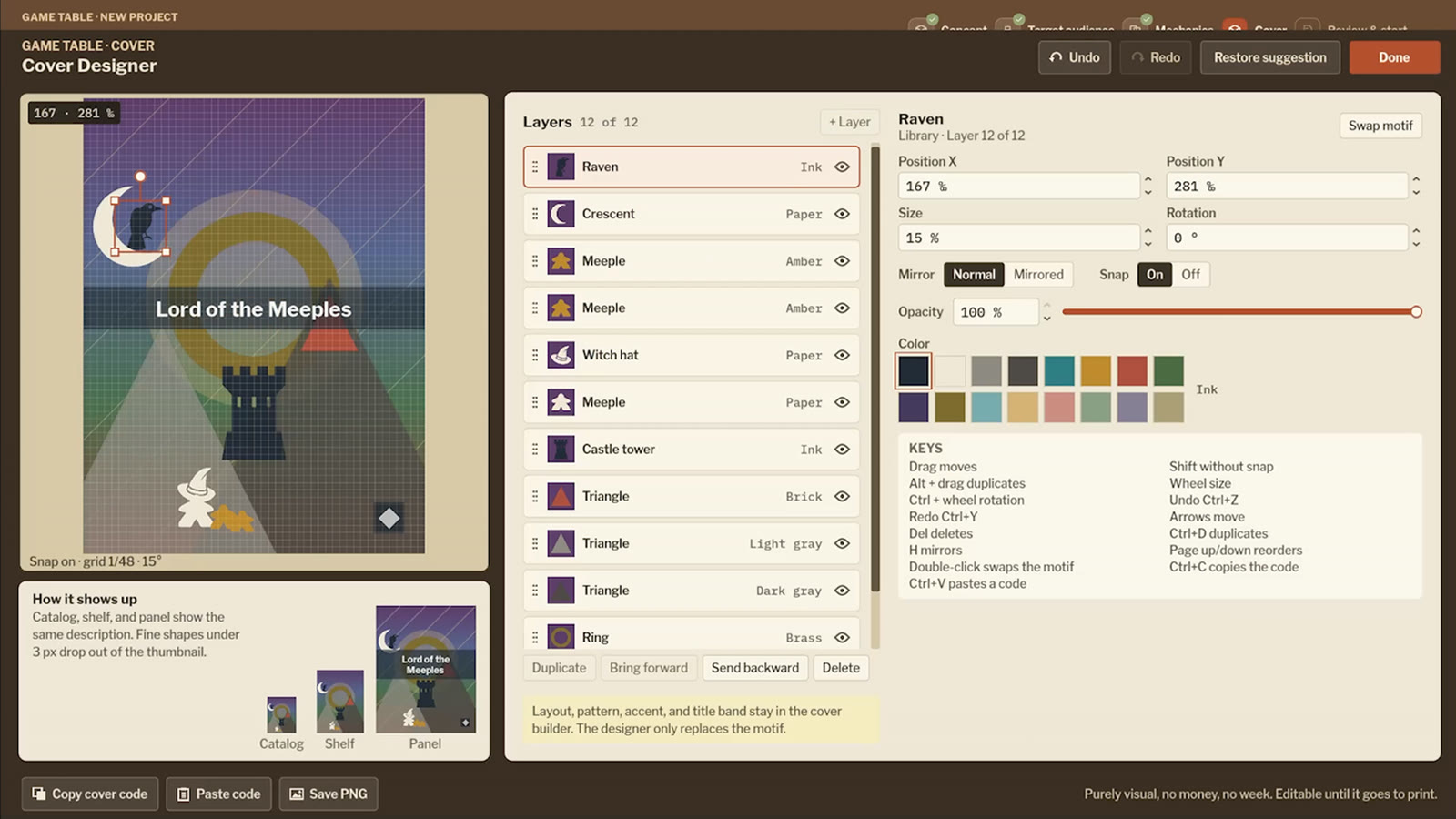
Give your game a name and build its cover from layers, motifs and colors. The box you design here is the box that lands on the shelf.
Take 3 · Playtest night
Simulated groups play your prototype. Click a tester to hear what bugged them, fix what needs fixing, and test again. You decide when it is ready for print.
Take 4 · Stock corner
Get a quote, pick a print run and pay the printer in installments. Too few copies and you sell out while the reprint takes weeks. Too many and your money sits in boxes.
Take 5 · Release night
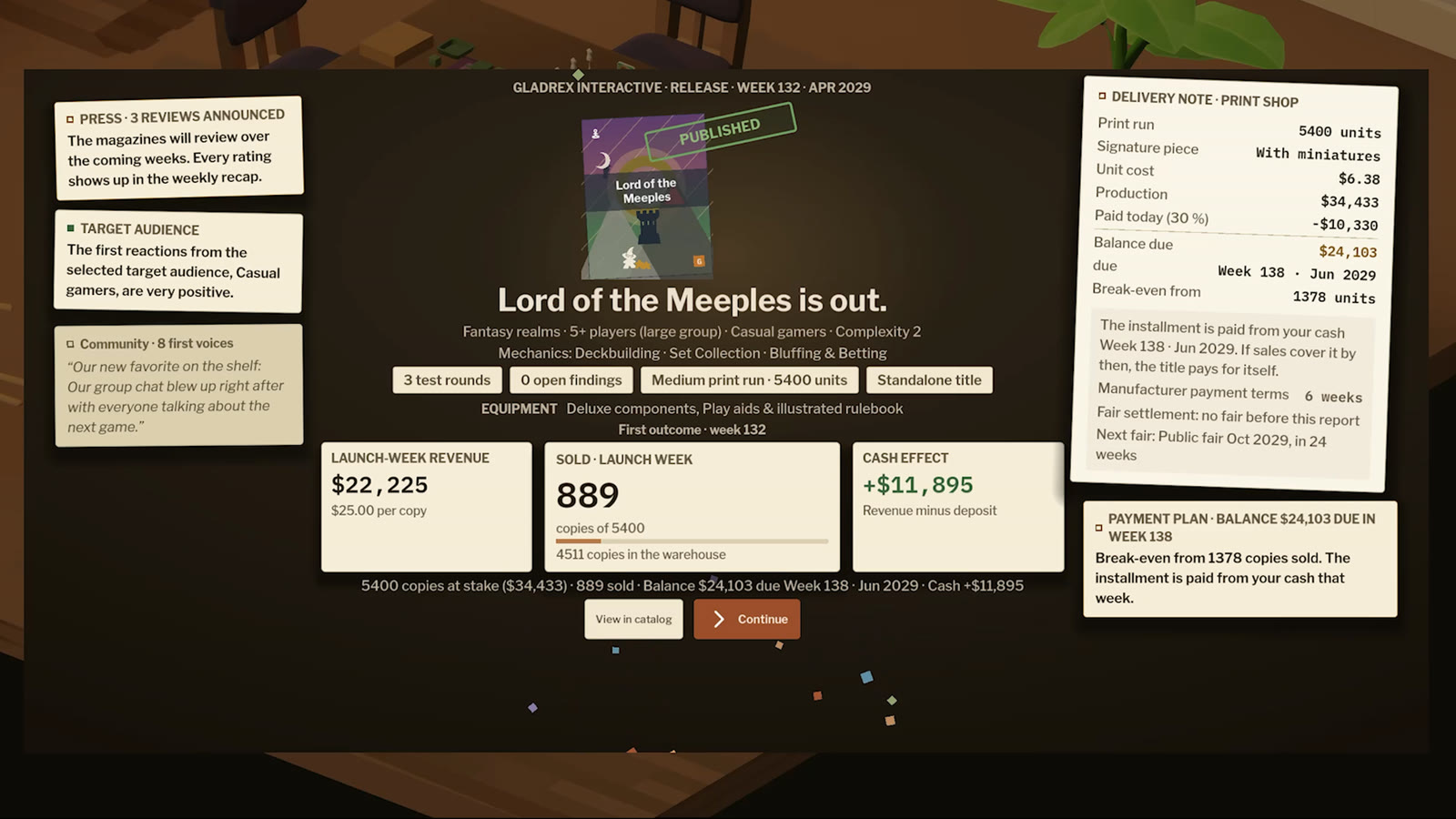
The box drops, the stamp lands, and the first week's numbers come in. Your prototype is a title in your catalog now, and the magazines have their review copies.
Take 6 · Award gala
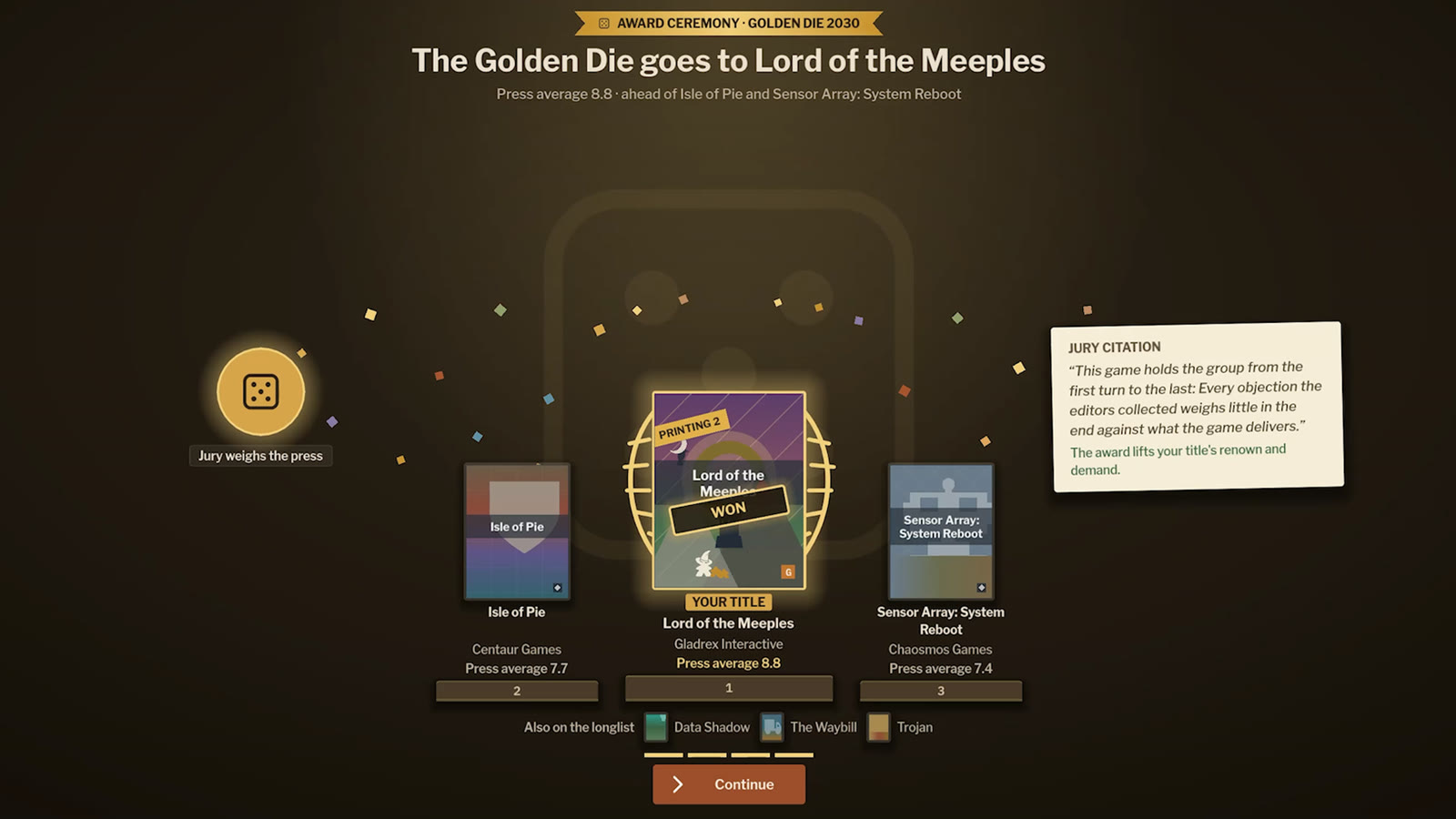
Magazines review over weeks, players rate your games on BoardGameFreak, and once a year a jury picks the finalists. A gala night lifts a title's renown, and its demand.
Every game you publish walks the same road as a real one: from an idea on the whiteboard to a box in a warehouse to a review in a magazine.
Pick two to four mechanics; each states its promise and its risk in plain words. There is no lookup table of best combinations. You find out at the table.
Finding · Focus group "Downtime drags with four players."
Build the cover in the designer, pick one signature piece, commit to a run and pay the printer in installments. Unsold boxes sit in your stock and cost money. Selling out? A reprint takes weeks, so order before the shelf is empty.
Invoice · Meeple Manufaktur Balance $4,922 · due week 15
Five magazines review your game over weeks, not instantly, and players rate it on BoardGameFreak, the game's own community site. Invite a content creator to a stream night, put on a demo at the fair, and see your title on the longlist for one of three annual awards.
Press · Announced "Three reviews are on the way."
No research points. New mechanics and themes land on your idea wall because you experienced them: a walk across the fair, a game night with rival titles, the jury evening after a nomination.
Idea wall · New "Push Your Luck, seen at the fair."
How it plays together
Wild clicking dies, iterating wins. Weekly turns, no timers, a real economy working quietly underneath, and the whole game lives in one walkable studio instead of menu screens.
The box is on the table. The cameras come next.
The person behind the box
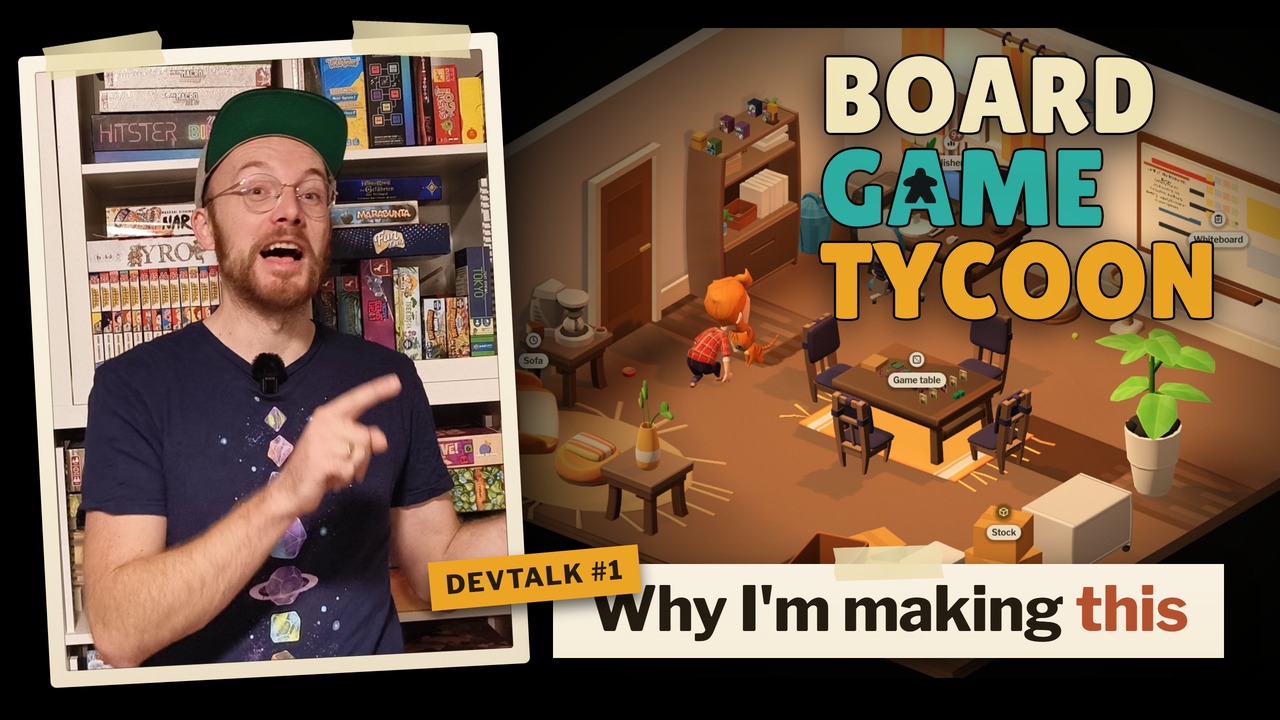
Board Game Tycoon is made by one person. In the first Dev Talk I say who, and why, and then open the project.
Prints from the studio
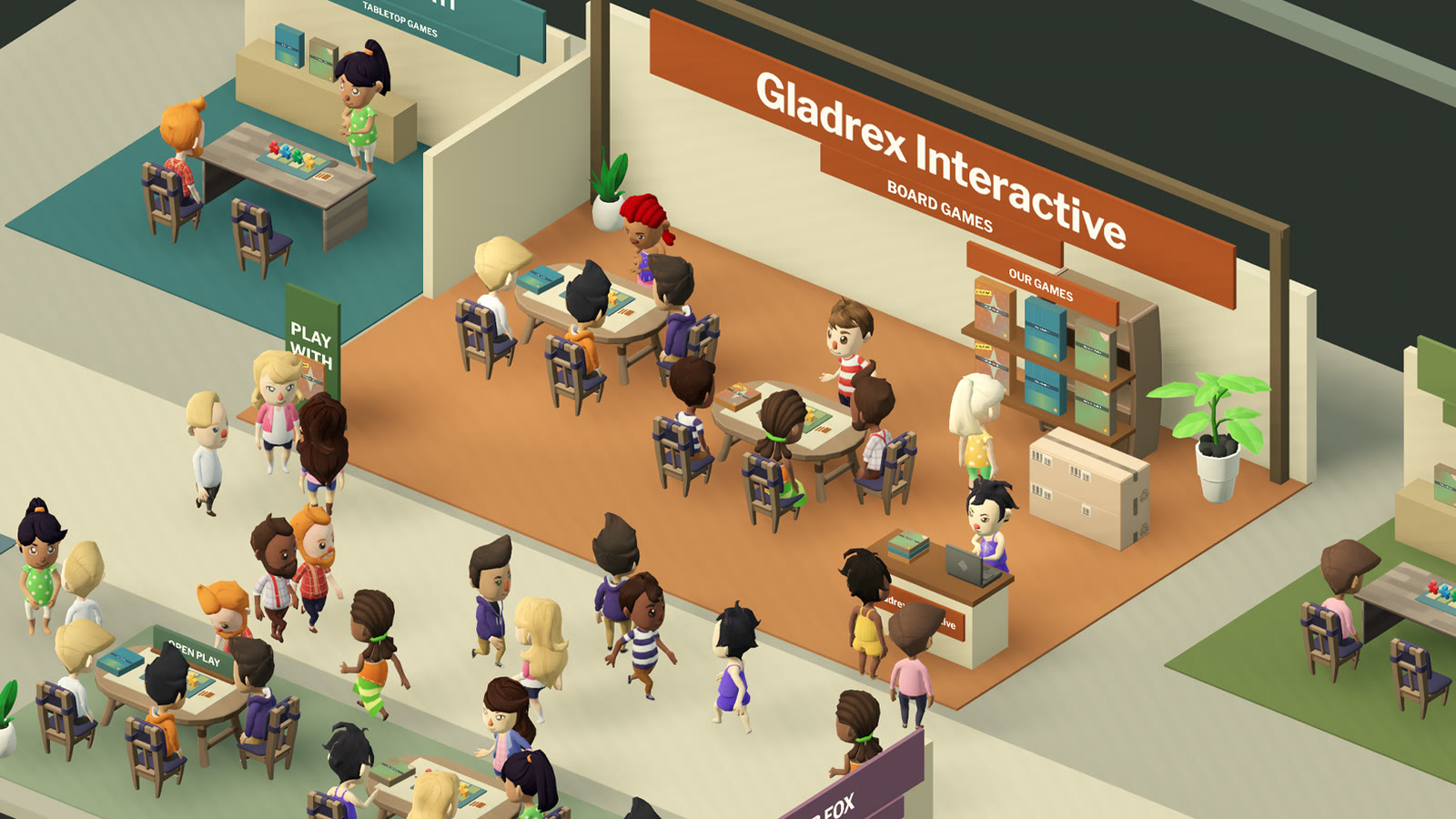
No menu screens. You walk through an isometric studio: plan at the whiteboard, playtest at the table, manage money at the PC, and let a week pass on the sofa. The big nights get a stage of their own.
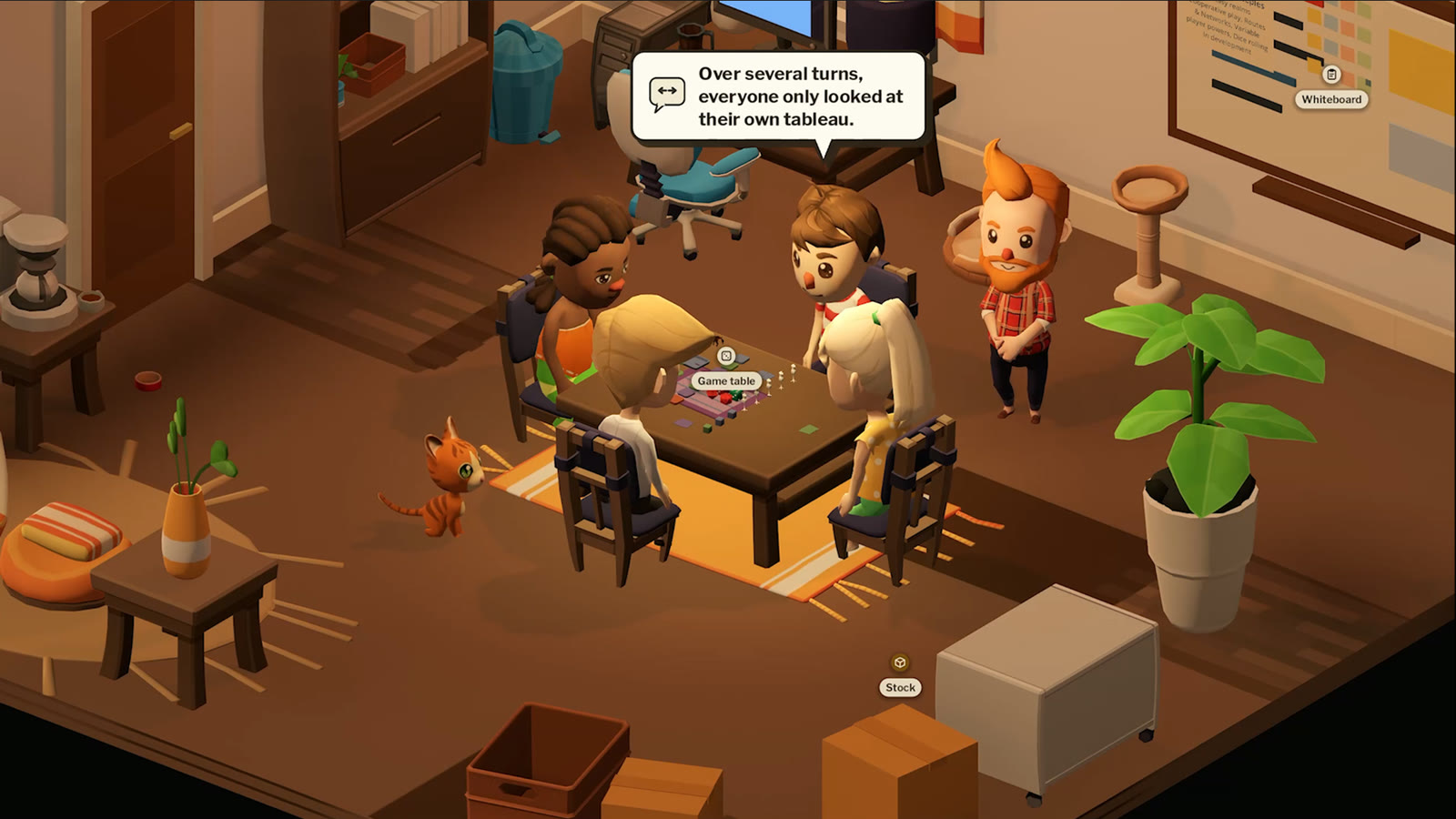
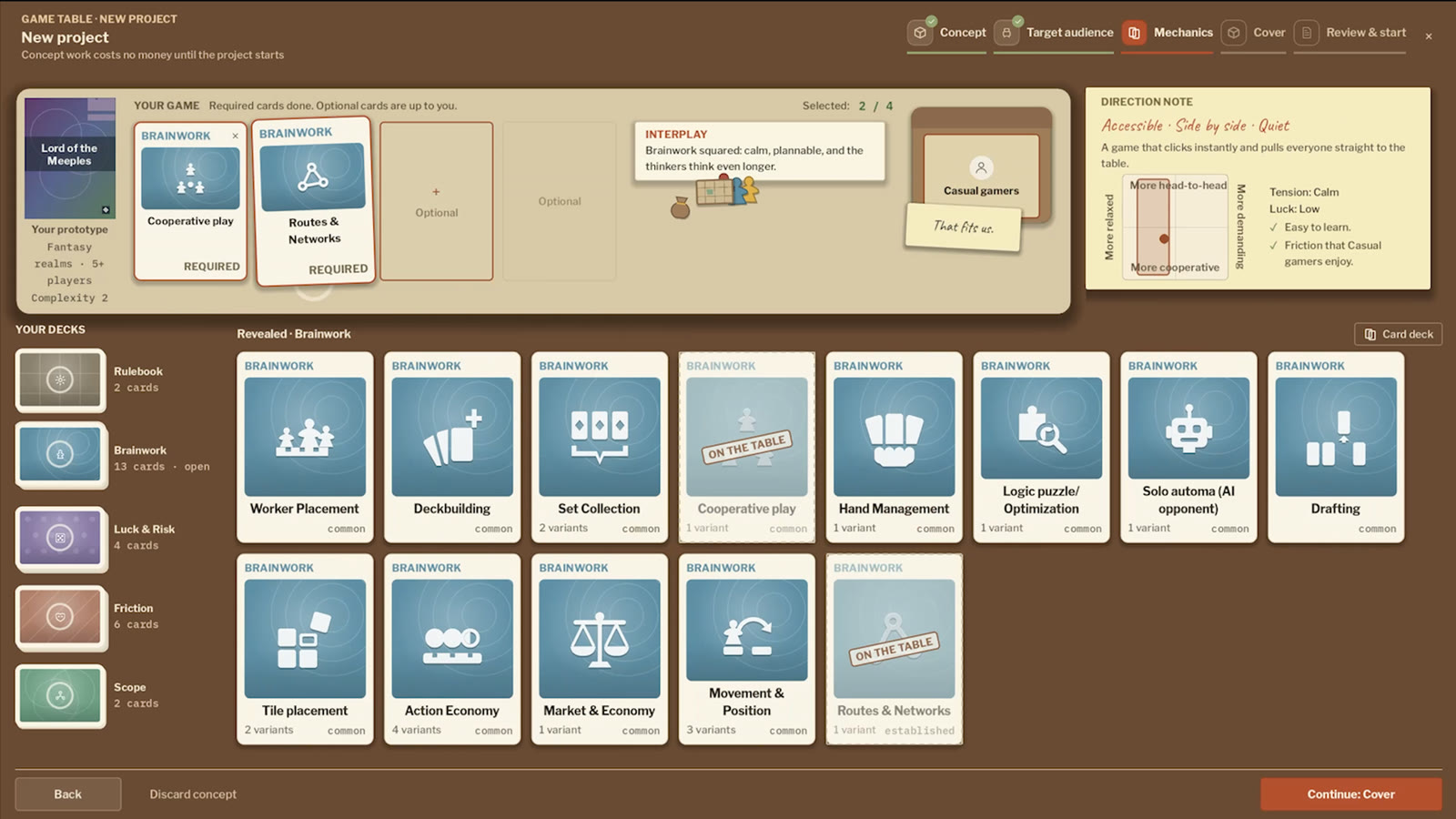
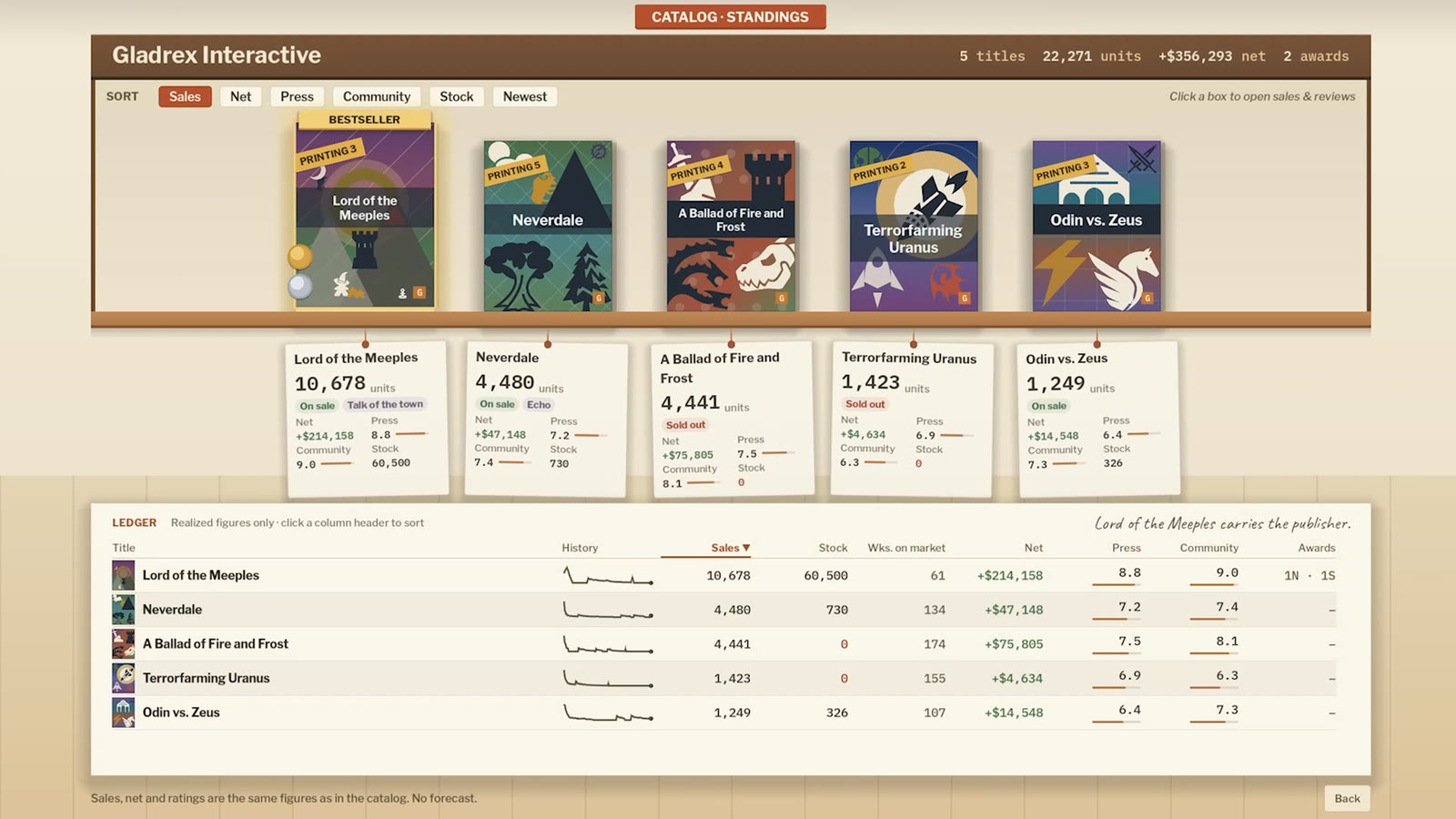
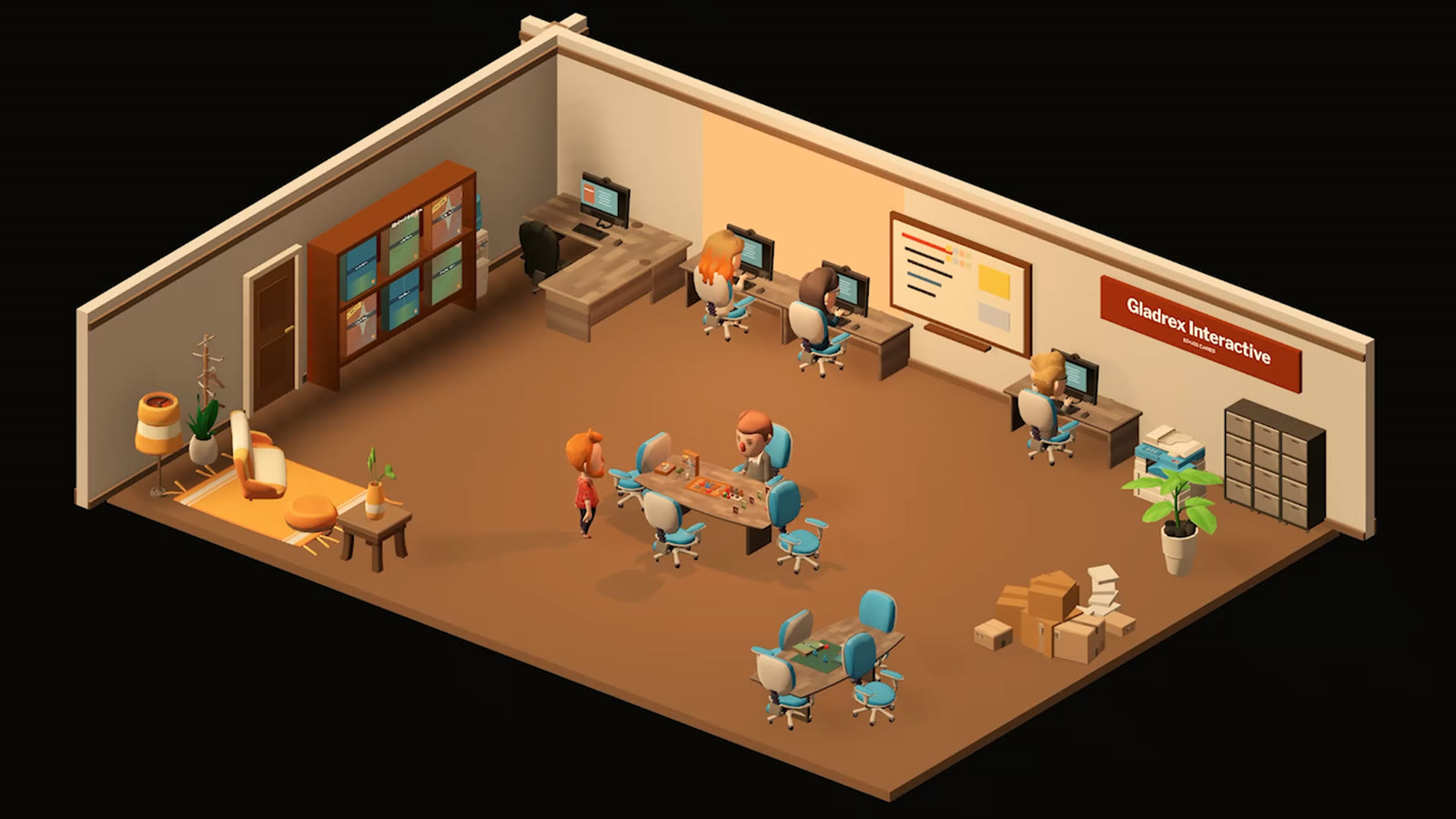
Work in progress · captured from the current build · fully playable in English and German · two previews show the full release
Brettspiel-News.deOct 15, 2026
The first article about the game, in German: who makes it, how a game goes from the first idea to a reprint, and when the Steam page opens.
Read it on Brettspiel-News.de (German)
I just sent a confirmation link to . Click it, and you're on the list. Nothing else arrives until you do.
Press, creators and questions welcome. One person packs every box.